
What is Feria de Malaga?
The Feria de Malaga is the city's biggest annual celebration - a week in mid-August when Malaga sets aside its routine and turns into one long street party. It traces its roots to 1487, when the Catholic Monarchs took the city, and the modern fair has grown into one of the largest summer ferias in all of Andalucia. For eight days and nights, the historic centre and a vast purpose-built fairground both fill with music, flamenco dresses, fried fish, sweet wine and dancing.
What makes Malaga's feria unusual is that it runs in two distinct halves. There is a feria de dia - the day fair - that takes over the narrow streets of the old town from around midday, and a feria de noche - the night fair - that happens kilometres away at a dedicated fairground and runs until the small hours. They have different energy, different crowds and different appeal, and getting the most out of the week means understanding both.
New to Malaga? Don't think of the feria as a single event you go to once. It is a whole week the city lives differently. Locals dip in and out - a couple of hours in the centre one afternoon, a late night at the fairground another. There is no wrong way to do it.
Feria de Malaga 2027: Dates
The Ayuntamiento de Malaga confirms the official dates in the spring, so the 2027 programme is not out yet. The fair follows a reliable pattern, though: it opens on the Saturday before 19 August, the anniversary of the city's 1487 reconquest, and runs eight days without a break. That puts the 2027 fair at Saturday 14 to Saturday 21 August 2027. Expect the traditional piromusical fireworks the night before the official start, fired beside La Malagueta beach and the port around midnight (a drone show usually runs shortly before it). Crowds gather along the seafront to watch, so get there early if you want a spot on the sand.
Dates
Expected 14 to 21 August 2027 (dates to be confirmed)
Opening fireworks the night before the official start, by La Malagueta and the port.
Day fair
Historic centre
Streets around Calle Larios, Plaza de la Constitucion and the old town, from midday.
Night fair
Cortijo de Torres
The recinto ferial fairground on the western edge of the city, running late.
Cost
Free to enter
No tickets needed. You only pay for food, drink and funfair rides.
Exact programme details - the firework time, concert line-ups at the fairground auditorium, and the parade schedule - are published by the Ayuntamiento de Malaga in the weeks before the fair. Confirm the dates above against the official announcement when it lands in the spring, then check the programme nearer the time for the finer detail.
Why It Matters If You Live Here
If you have recently moved to Malaga, the feria is the moment the city shows you who it really is. It is also genuinely useful to plan around, because for one week the rhythm of daily life changes around you.
- The whole city slows, then speeds up. Many businesses close or shorten hours, especially around 15 August, which is also a national holiday. Errands you take for granted may need rescheduling.
- 19 August is a local holiday in Malaga. It marks the city's incorporation into the Crown of Castile in 1487 and is the historic centrepiece of the fair, so it is both the busiest day and, for many residents, a day off work. Worth knowing before you schedule anything for that Wednesday.
- It is the easiest week to meet people. The feria is sociable by design. Striking up conversations at a caseta, joining a group dancing in the street, or simply being out among neighbours is far easier than on a normal Tuesday.
- It is a window into local culture. Flamenco, verdiales folk music, the traditional dress, the sweet Malaga wine - this is Andalucian identity on full display, and you do not need to be a tourist to appreciate it.
- The centre gets loud and busy. If you live in or near the old town, expect noise late into the evening. Knowing this in advance lets you plan - lean into it, or get out of town for a night.
The Day Fair in the Centre
The feria de dia is, for many residents, the heart of the week. From around midday the historic centre fills with people: bars set up outside, makeshift bodegas pour the sweet local wine, and impromptu groups dance sevillanas in the street. The streets around Calle Larios, Plaza de la Constitucion and the lanes of the old town are the epicentre.
It is colourful, hot and crowded in the best way. You will see women in flowing flamenco dresses, horse-drawn carriages, and live music spilling out of doorways. The classic order at a centre bodega is a glass of vino dulce - the sweet Malaga wine - or a cold beer, with something fried to share.
The day fair winds down in the late afternoon as the heat peaks and people go home to rest. That pause is deliberate: it is the bridge to the night fair, which is a completely different experience.
Local rhythm: The smart way to do feria is the local way - the centre in the early afternoon, a long break and a proper meal at home, then the fairground later at night. Trying to do both back to back in August heat will wear you out fast.
Settling into Malaga? Start your mornings here
Malaga Expat Daily: a short English digest of the day's local news, plus the events worth your time. Free, no credit card.
The Night Fair at Cortijo de Torres
The feria de noche happens at the Cortijo de Torres, a huge dedicated fairground - the recinto ferial - on the western edge of the city. This is the part that runs late: it gets going in the evening and keeps going into the early hours of the morning every night of the week.
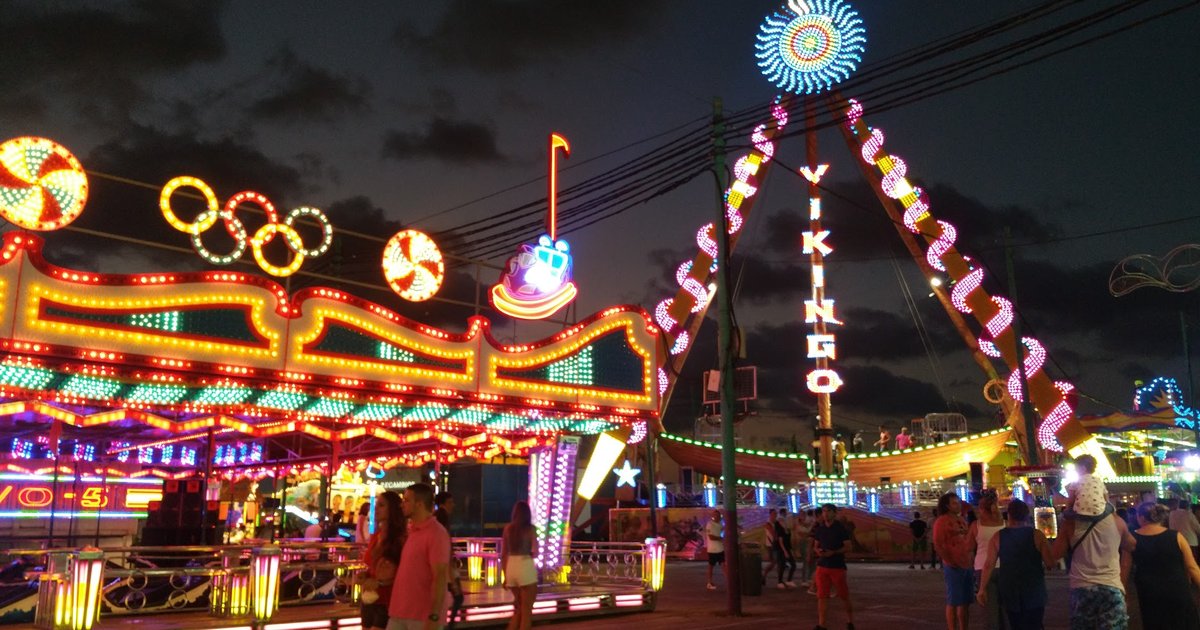
The fairground is split into two worlds. One is the casetas - large open marquees, most of them public, run by neighbourhood associations, political groups, clubs and businesses. Inside there is music, dancing, food and drink. The other is the funfair, an enormous strip of rides, attractions, stalls and lights that draws families and teenagers alike.
A key thing for newcomers to know: unlike the famously private casetas of Seville's feria, Malaga's casetas are overwhelmingly public. You can walk into almost any of them, find a table or join the dancing, and nobody will ask whether you belong. That openness is part of why Malaga's feria feels so welcoming to outsiders.
Getting Around During the Fair
Moving between the two halves of the feria is the main logistical puzzle of the week.
The day fair is in the centre, so if you live in Malaga it is usually walkable or a short bus or metro ride. The old town streets are pedestrianised during the fair.
The night fair is the trickier one. The Cortijo de Torres fairground is several kilometres out, and the city lays on special bus lines to serve it throughout the feria, including late-night and early-morning services. These are by far the easiest way to get there and, crucially, back.
Driving to the fairground is possible but rarely worth it: parking fills early and the roads around the recinto get heavily congested. Taxis and ride-hailing work but face long waits and surge pricing at the busiest hours.
Heads up: Plan your trip home from the fairground before you go out. The buses run late, but the queues at 3 or 4 am are real. Knowing your line and roughly when it runs saves a frustrating end to a good night.
Practical Tips for Newcomers
The heat is the main challenge
Mid-August in Malaga is hot - daytime temperatures regularly climb past 30C. The day fair takes place in full sun. Pace yourself, stay in the shade between bursts of activity, drink water alongside everything else, and do not be surprised when the centre empties out in the mid-afternoon. That is the heat, not the party ending.
What to wear
There is no dress code. Some locals go all in with traditional flamenco dresses or smart summer outfits for the day fair, and it is lovely to see, but most people simply dress for the heat. Light clothing and comfortable shoes you can walk and dance in for hours are what actually matters.
Food and drink
The signature feria drink is the sweet Malaga wine, often served straight from the barrel at centre bodegas. At the fairground you will find everything from grilled sardine skewers (espetos) and fried fish to churros and funfair snacks. Carry some cash - while cards are widely accepted, smaller stalls and busy bars are faster with coins and notes.
Language
You do not need Spanish to enjoy the feria. It is built around music, food and atmosphere, all of which translate without words. A few basic phrases help when ordering, and locals tend to be relaxed and friendly with newcomers - the feria is not the week anyone stands on ceremony.
With children
The fair is family friendly. The day fair in the centre is easy with kids, and the fairground's funfair is a genuine highlight for them. Daytime and early evening are the calmest windows; the casetas get loud and crowded as the night goes on.
Insider Tips
- Watch the fireworks from the seafront. The opening display over Malagueta beach is the unofficial signal that feria has begun. Arrive early for a spot along the paseo and treat it as the curtain-raiser to the week.
- Do not try to do everything in one day. The locals who enjoy feria most treat it as a marathon, not a sprint - a little each day across the week, not one exhausting all-nighter.
- Go to the fairground midweek if you want it calmer. The first and last weekends are the busiest. A Tuesday or Wednesday night still has the full atmosphere with more room to breathe.
- Seek out the verdiales. Beyond the flamenco, look for verdiales - a raw, hypnotic folk music from the mountains around Malaga, with its own distinctive costumes. It is one of the most authentically local things you will see all week.
- Plan your non-feria life around it. With 15 August a national holiday, 19 August a local one, and many shops on reduced hours in between, sort out shopping, appointments and admin before the fair starts.
- Pick a quiet base if you live in the centre. If the old-town noise is too much, the night fair at Cortijo de Torres is the louder, later half - escape there or out of town, and use the centre for the gentler daytime side.
FAQ
When is Feria de Malaga 2026?
Feria de Malaga 2026 runs from Saturday 15 to Saturday 22 August. The opening fireworks display is held the night before the official start, on or around 14 August, launched from the Malagueta seafront.
What is the difference between the day fair and the night fair?
The day fair (feria de dia) takes place in the historic centre, with music, dancing and people in traditional dress filling the streets from around midday. The night fair (feria de noche) is at the Cortijo de Torres fairground on the edge of the city, with funfair rides, casetas and live music running late into the night.
Is Feria de Malaga free?
Yes, the fair itself is free to enter. The day fair in the centre and the public casetas at the Cortijo de Torres fairground cost nothing to walk into. You only pay for food, drinks and funfair rides. Unlike Seville's feria, most casetas in Malaga are public, not private.
How do I get to the Cortijo de Torres fairground?
Special bus lines run to the Cortijo de Torres recinto ferial throughout the fair, including late-night services. Driving is possible but parking fills quickly and the area is congested. The bus is the simplest option, especially for the return trip in the early hours.
Do I need to speak Spanish to enjoy Feria de Malaga?
No. The fair is mostly about music, dancing, food and atmosphere, so you can enjoy it without any Spanish. A few basic phrases help when ordering at a caseta, but the experience is welcoming and easy to join in with as a newcomer.
What should I wear to Feria de Malaga?
There is no dress code. Some locals wear traditional flamenco dresses or smart summer clothes for the day fair, but most people simply dress for the August heat. Light, comfortable clothing and shoes you can walk and dance in are the priority.
Is Feria de Malaga family friendly?
Yes. The day fair in the centre is relaxed and suits families, and the Cortijo de Torres fairground has a large funfair area with rides for all ages. Daytime and early evening are the calmest times to visit with children.
Where can I keep up with what's happening in Malaga?
Our free daily newsletter sends a short, English-language summary of Malaga's news and events every day - so whether it is feria week or an ordinary Tuesday, you always know what is going on. Join below.
Daily Malaga news in English. Free.
Join 1,800+ expats across Spain. Every day: a short summary of Malaga news, events and what's worth your time - in clear English.