
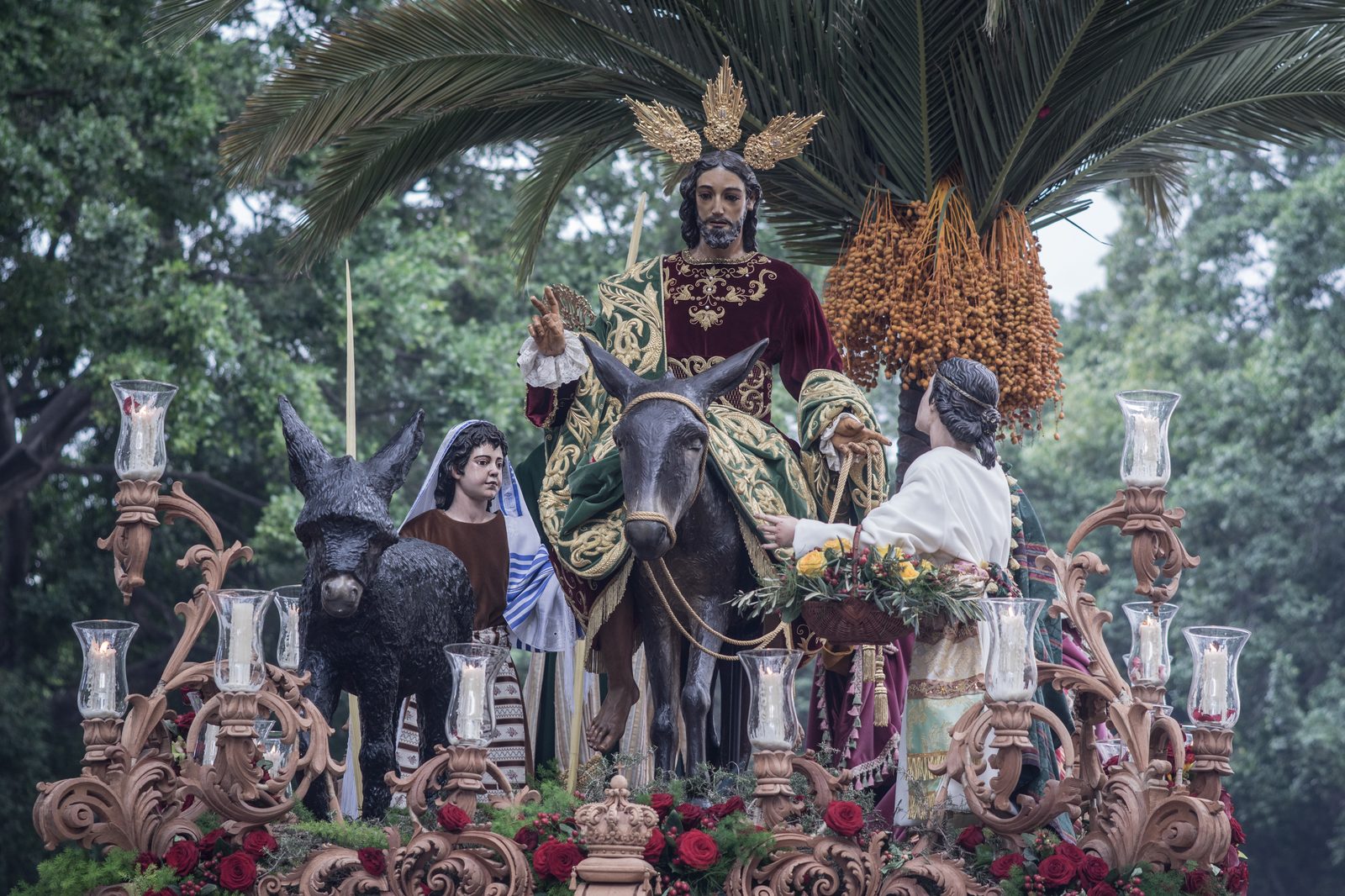
What is Semana Santa?
If you're new to Malaga, Semana Santa (Holy Week) is the city's most important and most spectacular event of the year. Declared a Fiesta de Interes Turistico Internacional (Festival of International Tourist Interest), it runs from Palm Sunday to Easter Sunday - this year, March 29 to April 5.
At its core, Semana Santa is a deeply religious tradition dating back to the 16th century. Each day, cofradias (brotherhoods) carry elaborately decorated tronos (thrones) through the streets - massive platforms bearing religious statues of Christ and the Virgin Mary, adorned with flowers, candles, and intricate gold and silverwork. The portadores (carriers) shoulder these enormous structures from their home church through the city center and back, often over many hours.
What makes Malaga's Semana Santa unique in Spain is the sheer scale of its tronos. While Seville is more famous internationally, Malaga's processional thrones are among the largest and heaviest in the country - some weigh over 5,000 kg and require more than 250 portadores to carry them. The atmosphere here is also distinctly different: less solemn, more passionate. Malaguenos cheer, applaud, and sing saetas from their balconies as the processions pass below.
First timer? This is not a quiet, reserved affair. Expect roaring crowds, spontaneous flamenco singing, the heavy scent of incense and orange blossom, and moments of genuine emotion - even if you're not religious. Semana Santa in Malaga is a cultural experience that transcends faith.
Things Nobody Tells You Before Your First Semana Santa
- Processions take hours. A single cofradia can take 3-4 hours to pass a given point. Some processions last 10-14 hours total. This is not something you watch for 20 minutes - you commit or you leave early.
- You will stand. A lot. Unless you've bought a silla (reserved chair) along the official route, expect to be on your feet for hours. Wear comfortable shoes.
- The crowd surges are real. When a popular trono approaches, the crowd pushes forward. Hold your ground or step back to a side street. Don't fight the crowd - go with the flow.
- Rain cancels everything. The tronos are works of art worth hundreds of thousands of euros - velvet, gold leaf, carved wood, and centuries-old statues. They cannot get wet. If it rains (or even looks like it might), processions are cancelled. No rain date, no rescheduling. The hermano mayor makes the call, and it's final.
- The pointed hoods are not what you think. If you're from a country where pointed hoods have a very different association - relax. The capirote is a centuries-old symbol of penance in Spanish Catholic tradition, predating any other association by hundreds of years. Nazarenos wear them as part of their penitential walk.
- Incense is constant. If you're sensitive to smoke, be prepared. The sweet, heavy scent of incense follows every procession.
Key Figures for 2026
Here's what the 2026 edition looks like by the numbers:
Cofradias
41 brotherhoods
Each with their own processional route, tronos, and traditions - some dating back over 500 years
Tronos
Over 60 processional thrones
Carried through the streets over the course of the week, some requiring 200-260 portadores each
Heaviest Tronos
Up to 5,000-5,500 kg
Malaga's tronos are among the largest in all of Spain - dwarfing those in Seville and most other cities
Visitors
1.5-2 million over the week
Malaga's population roughly triples during Semana Santa. Hotels sell out months in advance.
Carrera Oficial
Calle Larios to the Cathedral
The official route all cofradias must pass through - Malaga's most iconic street becomes the stage
Procession Hours
Up to 14 hours on peak days
Holy Thursday and Good Friday see processions from midday well into the early morning hours
2026 Dates and Schedule
Semana Santa 2026 runs from Palm Sunday, March 29 to Easter Sunday, April 5. Each day has its own character and key processions. The biggest days are Holy Wednesday (El Cautivo), Holy Thursday night, and Good Friday.
Note: Exact departure times, routes, and cofradia assignments vary each year. The schedule below covers the key days and what to expect on each. For official 2026 itineraries and times, check the Agrupacion de Cofradias de Malaga website or the official Semana Santa de Malaga app.
Weather warning: Rain cancels processions with no rescheduling. Check the forecast daily and follow cofradias on social media for real-time updates. Even a 30% chance of rain can trigger a cancellation - the cofradias won't risk their centuries-old statues and ornate tronos.
2026 weather update (Mar 30): Palm Sunday was clear and sunny - all 9 cofradias processed without issues. The rest of the week looks mostly dry, but Holy Wednesday (El Cautivo) has the highest rain risk at around 40% with humidity up to 86%. Good Friday currently has the best forecast. Temperatures around 13-19°C - dress in layers, especially for evening processions. Follow cofradias on social media for real-time cancellation decisions on the day.
| Day | Key Processions and Events |
|---|---|
| Palm Sunday Mar 29 |
La Pollinica - the beloved children's procession, one of Malaga's most popular. Christ's entry into Jerusalem on a donkey. Families line the route, palms are blessed. All 9 cofradias: Pollinica, Lagrimas y Favores, Dulce Nombre, Salutacion, Humildad, Salud, Humildad y Paciencia, Huerto, and Prendimiento. Update: All 9 cofradias processed successfully under clear skies. Pollinica departed at 09:50, with processions running until the early hours of Monday. |
| Monday Mar 30 |
Lunes Santo. Several cofradias process, including Estudiantes and Dolores del Puente. A quieter day compared to what's coming - good for first-timers to ease into the experience. |
| Tuesday Mar 31 |
Martes Santo. Cofradias include Rescate, Sentencia, and Estrella. Processions run afternoon into late night. |
| Wednesday Apr 1 |
Miercoles Santo - El Cautivo. The most emotionally charged day. The Cofradia de El Cautivo (Nuestro Padre Jesus Cautivo) draws the largest single-day crowd. Malaguenos have a deep, personal devotion to this image. The crowds are immense, and spontaneous saetas ring out from balconies along the entire route. Also: the historic tradition of the prisoner release - a real prisoner is freed by petition to the government, a custom dating back centuries. |
| Thursday Apr 2 |
Jueves Santo - the great night processions. Some of the most spectacular tronos come out after dark, lit by hundreds of candles. Cofradias include La Cena, Vinagreros, and Zamarrilla. The unmissable moment: the Spanish Legion (La Legion) marching through the city to carry the Cristo de la Buena Muerte (Mena). Legionnaires sing their hymn and march in formation - a uniquely Malaga spectacle that draws massive crowds and defines Semana Santa here like nothing else. The atmosphere on Calle Larios at midnight is electric. Processions run from afternoon until 3-4 AM. |
| Friday Apr 3 |
Viernes Santo - the most solemn day. The focus shifts to Christ's crucifixion and burial. Key processions: El Monte Calvario, El Descendimiento, and Santo Sepulcro (the Holy Burial). The mood is more reflective - this is when even the rowdiest crowds fall quiet. Processions from morning through late night. |
| Saturday Apr 4 |
Sabado Santo. The Santo Traslado and Soledad de San Pablo process. A transitional day - the solemnity of Friday gives way to anticipation of Easter. Fewer processions, but still worth seeing. |
| Sunday Apr 5 |
Domingo de Resurreccion - Easter Sunday. La Resurreccion processes through the city with a joyful, celebratory tone - the week's journey from suffering to triumph. The lightest and most festive procession. Many families celebrate with a big Easter lunch afterwards. |
Plan ahead: Holy Thursday and Good Friday are public holidays. Most shops close, but restaurants stay open (and get very busy - reserve ahead). Schools are closed for the entire week.
Where to Watch the Processions
The Carrera Oficial (Official Route)
Every cofradia must pass through the Carrera Oficial, which runs along Calle Larios and Plaza de la Constitucion. This is where the largest crowds gather and where the atmosphere is most intense. Barriers line the route, with sillas (reserved seats) on both sides and standing room behind.
Silla tickets: Reserved chairs along the Carrera Oficial must be purchased in advance from the Agrupacion de Cofradias. Prices vary by location and day - expect EUR 15-40+ per seat, more for prime spots on key days. They sell out, so book early. Check the Agrupacion de Cofradias de Malaga website for availability.
Best Free Viewing Spots
- Near the churches. Position yourself near a cofradia's home church to watch the salida (departure) or encierro (return). These are the most dramatic moments - the massive trono navigating a tight doorway, the crowd holding its breath, the portadores straining to fit through. Far more intimate than the official route.
- Alameda Principal. A wide boulevard where processions have more room to spread out. Less claustrophobic than Calle Larios, easier to move around.
- Plaza de la Merced. Several processions pass through here. Open space, good for photography, and close to bars for breaks between processions.
- Side streets off Calle Larios. Stand at the intersections where processions turn from side streets onto Calle Larios - you get a head-on view of the trono approaching.
Local tip: The chicota - when portadores dramatically lift, sway, or lower the trono - is the moment everyone waits for. It happens most often near the home church and at key corners along the route. Position yourself at a tight turn or a church doorway for the best view of this. When you hear the crowd start chanting or clapping rhythmically, a chicota is about to happen.
Semana Santa is here - stay in the loop
Daily Malaga news, Semana Santa coverage, and local tips for expats - delivered to your inbox every morning, free.
Getting Around During Semana Santa
The city center becomes effectively pedestrian-only during processions. Streets close, buses reroute, and traffic grinds to a halt. Here's how to navigate it:
The golden rule: Walk. The historic center is compact enough to cover on foot, and during Semana Santa there is genuinely no faster way to get around. Driving into the center is effectively impossible during procession hours.
Metro Malaga
The metro is your best friend for getting close to the center. Lines 1 and 2 run through the city with stops at Atarazanas (closest to Calle Larios) and other useful stations. Service is extended during Semana Santa, with later last trains. Check the Metro Malaga app for real-time schedules.
EMT Buses
- Many bus routes are diverted during procession hours. Changes vary by day and time as streets open and close.
- Download the EMT Malaga app for real-time route changes and arrival times.
- Plan extra time for any bus journey - diversions can double travel times.
Taxis and Rideshare
Available but extremely difficult during peak procession times. If you need one, move away from the center and the procession routes to find a street that's still open to traffic. App-based rideshares face the same road closures.
Parking
Do not drive into the center. Park outside the historic core and walk or take the metro in. Underground car parks at Alcazaba, Plaza de la Marina, and the port area are your best options - arrive early, they fill up fast.
Insider strategy: If you're coming from outside Malaga, park at a metro station outside the center (e.g., Palacio de los Deportes, Universidad) and take the metro in. Far less stressful than circling the center looking for parking.
Safety and Crowds
Semana Santa in Malaga is generally safe, with a large police presence throughout the week. That said, the crowds are enormous and there are a few things to be aware of.
Crowd Density
- Calle Larios on Holy Wednesday (El Cautivo) and Holy Thursday night reaches extreme density. If you don't like tight crowds, watch from a side street or choose a less popular day.
- The moments just before and after a popular trono passes create crowd surges. Keep children close and have a meeting point agreed in case you get separated.
- If the crowd feels too dense, move to a side street. The processions follow set routes, so you can always pick them up again at a less crowded point.
Pickpockets
Dense crowds attract pickpockets. Standard precautions: keep your phone and wallet in front pockets or a cross-body bag. Be especially aware in the standing areas along the Carrera Oficial and at any point where the crowd is shoulder-to-shoulder.
Weather
Late March/early April in Malaga is generally mild - expect 15-23 C during the day, cooler at night (12-16 C). Rain is possible (this is still spring), and as mentioned, rain cancels processions. The nighttime processions on Thursday and Friday can get cool - bring a jacket.
Medical Services
Cruz Roja (Red Cross) sets up first aid stations along the procession routes during major days. Emergency number is 112. The main hospitals (Hospital Regional and Hospital Clinico) are outside the center and accessible even during closures.
With children? Palm Sunday (La Pollinica) is the most family-friendly procession. The late-night processions on Thursday and Friday are spectacular but run until 3-4 AM - plan accordingly. Children get tired, crowds get dense, and there's no quick exit once you're in the middle of it.
Traditional Food and Drink
Semana Santa has its own food traditions, rooted in Lenten customs of avoiding meat on certain days. Here's what to look for:
The Essentials
- Torrijas - the quintessential Semana Santa sweet. Bread soaked in milk (or sweet wine), dipped in egg, fried, and coated in sugar and cinnamon or drizzled with honey. Every bakery and many restaurants serve them during Holy Week. Simple, addictive, and deeply traditional.
- Pestinos - fried pastry dough glazed with honey or coated in sugar. Crunchy, sweet, and found at every bakery and confiteria in the city.
- Potaje de vigilia - a hearty chickpea and cod stew, traditionally eaten on fasting days (especially Good Friday). Comfort food that's been sustaining Malaguenos during Lent for centuries.
- Bacalao (salt cod) - prepared in dozens of ways during Semana Santa, since meat was traditionally avoided during Lent. Look for bacalao con tomate, buñuelos de bacalao (cod fritters), and bacalao al pil-pil.
- Hornazos - a traditional Easter bread with a hard-boiled egg baked into the dough, often given as gifts on Easter Sunday.
Drinks
Malaga Dulce (sweet Malaga wine) and Pedro Ximenez are the traditional accompaniments. These sweet, dark wines are produced in the Malaga region and pair perfectly with torrijas and pestinos. You'll find them at any bar or restaurant in the city.
Where to find the best torrijas: Local bakeries (panaderias) and confiterias are your best bet - they make them fresh throughout the week. Many restaurants also offer special Semana Santa menus featuring traditional dishes. Casa Aranda (by the Atarazanas market) and the Mercado Central de Atarazanas itself are good starting points.
Culture, Museums, and Music
Saetas - the Sound of Semana Santa
A saeta is a spontaneous, unaccompanied flamenco-style devotional song - sung from a balcony or from the crowd as a procession passes below. The procession stops. The crowd falls silent. A single voice rises, raw and powerful, filling the street. It's one of the most emotionally intense moments you can experience in Malaga.
Saetas are not scheduled or planned - they happen when a singer is moved to sing. Your best chance of hearing one is along Calle Larios during the major processions (especially Holy Wednesday and Thursday) or near churches where crowds are dense. When a saeta begins, stop and listen. Even if you don't understand the words, the emotion is universal.
The Marching Bands
Each cofradia is accompanied by bandas de musica (brass bands) or bandas de cornetas y tambores (bugle and drum corps). The music ranges from solemn funeral marches to powerful military-style compositions. Each cofradia has signature marches that regulars recognize instantly. The drums alone - dozens of them pounding in unison - create a physical vibration you feel in your chest.
The Art of the Tronos
The tronos themselves are extraordinary works of art. Many feature:
- Gold and silver leaf applied by hand over carved wood
- Embroidered velvet canopies and drapes, some hundreds of years old
- Hundreds of candles arranged in ornate candelabras
- Fresh flower arrangements - roses, carnations, iris - that are different for each procession
- Religious statues (imagenes) carved by master sculptors, some dating to the 17th and 18th centuries
The most admired tronos can be worth hundreds of thousands of euros. The craftsmanship is staggering - spend time looking at the details as they pass slowly by.
Visit the Churches
In the days before Semana Santa, many cofradias open their churches to the public so you can see the tronos and statues up close before they're carried through the streets. This is worth doing - you can appreciate the intricate details that are hard to see from the street. Check with individual cofradias for visiting hours.
Looking for more events in Malaga? Our Pro subscribers get access to a full events calendar for Malaga - concerts, festivals, talks, and more, updated daily. Check it out here.
Practical Tips
What to Wear
- Comfortable shoes - you'll be on your feet for hours on cobblestone streets. This is the single most important thing to get right.
- Layers - warm during the day, cool at night. The temperature drop after sunset can be significant, especially if you're standing still watching a procession.
- Respectful attire if you plan to enter any churches. Covered shoulders and knees are expected.
- On Holy Thursday, many local women wear mantilla (black lace veil) and dark formal clothing - a beautiful tradition to observe.
Photography Tips
- The nighttime processions (Thursday and Friday) are the most photogenic - candlelit tronos against dark streets.
- Zoom lenses help from behind the barriers. Wide angles work well for capturing the full street scene.
- The salida and encierro (departure and return to churches) are the most dramatic photo moments.
- Be respectful - this is a religious event. Avoid flash photography near the tronos and don't obstruct other viewers.
Tracking Processions
- The official Semana Santa de Malaga app provides real-time GPS tracking of processions, schedules, and route maps. Essential if you're trying to be in the right place at the right time.
- Follow @SemanaSantaMLG and local media accounts on social media for real-time updates, especially cancellation alerts.
- Local TV (Canal Sur) broadcasts live coverage of the major processions.
Hotels and Accommodation
Semana Santa is peak season in Malaga. Hotels book up weeks or months in advance, and prices increase significantly - expect to pay 2-3x the normal rate for central locations. If you're still looking, check areas slightly outside the center (like El Palo or Pedregalejo) that are still connected by bus.
Useful Spanish Phrases
- "Que cofradia es esta?" - Which brotherhood is this? (The question you'll ask most often)
- "A que hora sale?" - What time does it leave? (Referring to a procession's departure)
- "Guapa!" / "Guapo!" - A common shout of admiration directed at the Virgin or Christ statue as it passes
- "Viva!" - Shouted as the trono appears, especially at the salida
Semana Santa Beyond Malaga
Malaga has some of the best Semana Santa in Spain, but if you want to see how other cities celebrate, several are within easy day-trip distance:
- Seville (~2.5 hours by car, 2 hours by train) - Spain's most internationally famous Semana Santa. The processions are carried by costaleros (hidden under the paso) rather than Malaga's hombres de trono (visible on their shoulders). More solemn, arguably more theatrical. If you can only see one day elsewhere, try Madruga (early hours of Good Friday).
- Granada (~1.5 hours by car) - Processions against the backdrop of the Alhambra and the snowy Sierra Nevada. Smaller and more intimate than Malaga or Seville.
- Cordoba (~2 hours by car) - Processions through narrow medieval streets create a uniquely atmospheric experience. The tight spaces mean the tronos pass just meters away from you.
- Smaller Andalusian towns - Ronda, Antequera, and Priego de Cordoba all have their own Semana Santa traditions. Less crowded, more local character. Worth exploring if the big-city crowds feel overwhelming.
Note: If you plan to day-trip, remember that every city's Semana Santa runs simultaneously. Roads between cities get very congested, and return journeys can take much longer than usual. Plan for delays, especially on Holy Thursday and Good Friday.
Semana Santa Glossary
Key terms every visitor should know:
- Cofradia
- A brotherhood or religious fraternity that organizes and carries out a procession
- Trono
- The ornate throne carried manually through the streets on the shoulders of hombres de trono, bearing religious statues
- Hombre de Trono
- Person who carries the trono on their shoulders - Malaga's term (also called portador; Seville uses "costalero")
- Saeta
- A spontaneous flamenco-style devotional song sung from a balcony as a procession passes
- Nazareno
- A penitent walking in the procession wearing a long robe and pointed capirote
- Capirote
- The tall pointed hood worn by nazarenos during processions - a centuries-old symbol of penance
- Carrera Oficial
- The official route all processions must follow through the city center
- Chicota
- The dramatic lift-and-sway movement of the trono by portadores - the crowd's favorite moment
- Salida
- The departure of the trono from its home church at the start of a procession
- Encierro
- The return of the trono to its home church at the end of the procession
- Silla
- A reserved chair along the official route - tickets must be purchased in advance
- Mantilla
- A traditional black lace veil worn by women, especially on Holy Thursday
- Torrija
- Traditional Semana Santa sweet - bread soaked in milk, fried, and coated in sugar and cinnamon
- Hermano Mayor
- The leader of a cofradia - makes the final call on whether a procession goes out in bad weather
- Estacion de Penitencia
- The full processional journey of a cofradia from church to Cathedral and back
- Paso
- Another term for the processional throne - more commonly used in other cities like Seville
Want daily Malaga news in your inbox?
Join expats who get daily Malaga news, events, and local updates - delivered every morning, free.